Groups working for change collect a great deal of information about the conditions they want to shift. Knowing more does not reliably lead to acting better. What lets a group act on what it knows is the room people make for each other — whether anything uncomfortable, or awkward, or badly fitted to the existing frame can find a place there.
A short-term programme in adult education, carried out in 2022, took this as its working problem. It was called Social change and community development in the field of adult education, and it ran six residencies — on learning and living systems, on leadership, on economies, on difference and power, on conflict, on the forms organisations take. Twenty-six participants came from Poland, Italy, Argentina and Peru. INDIRE, the Italian national agency for European education programmes, later invited us to present the experience to Italian organisations beginning their own projects.
Paper Bodies
Those who came were not arriving empty. Several had watched projects they cared about come apart, and had already located the point of failure. One wrote that misunderstanding and unresolved conflict destroy political projects and shared dreams. Another traced the collapse of a family permaculture farm to something the soil could not correct: the people working it had stopped talking to each other. A third came looking for ways to listen more closely.
None of them lacked technique or instruments.
Each had run into the same problem from a different direction: what a group can know and how it can relate are one question, not two.
No six residencies exhaust what a group carries into a room. Every programme leaves a remainder. So we set aside a space during the residencies where we expected nothing, taught nothing, and set no objectives — the part of the design that admitted the design's limit. You cannot train the capacity to receive what exceeds a frame; you can only give it a place to happen.
Applications opened in the third week of February 2022. As the forms were being filled, Russian forces crossed into Ukraine. Some of those who would take part were already organising transport and shelter for people coming across the border. The war did not enter the room as an item on the agenda. It entered as something the group was already holding, before any session began.
Covid restrictions had been lifted a few months earlier. For several of those present, this was the first long stretch they had spent in a room among strangers, handling objects that went from hand to hand.
By September, when the work took place, none of this was news any longer. It had settled into the condition under which people were going about their work. We said at the outset where we were. After that, no session took the war as a subject. It arrived anyway, and brought others with it. Wars that had passed through grandparents who fought and parents who resisted. Wars fought inside one person, or between two people in the same house. Some of them decades old. Its presence showed in silences that ran longer than planned, and in how fast people reached for a figure when it began to tilt.
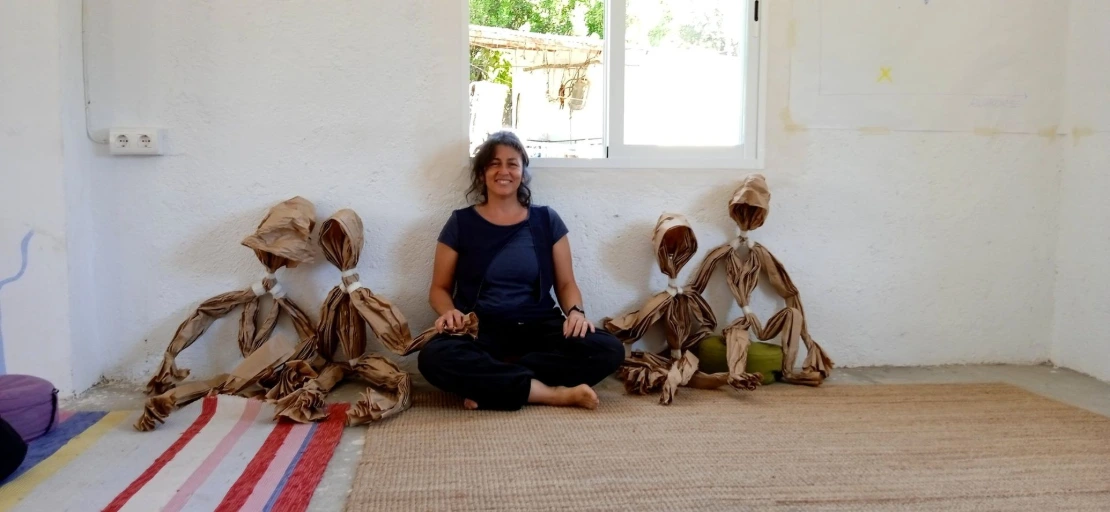
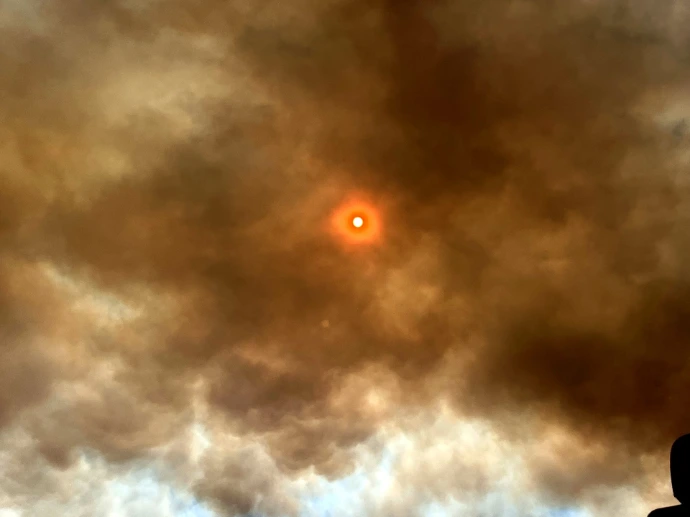
For ten days the group built human figures out of paper. A forest fire burned nearby. Ash drifted over the site for the duration of the work, and an evacuation remained possible throughout.
The figures barely held together. One person could hold a figure. One person could not make it move. Each needed several pairs of hands, and the coordination this demanded arrived before anyone reflected on it. Without it the work could not happen at all.
They represented nothing, and no one gave them words. The figures never speak: whoever manipulates them, and whatever plot comes out of it, works in silence — music at most, scenography improvised from the same paper or dropped altogether.
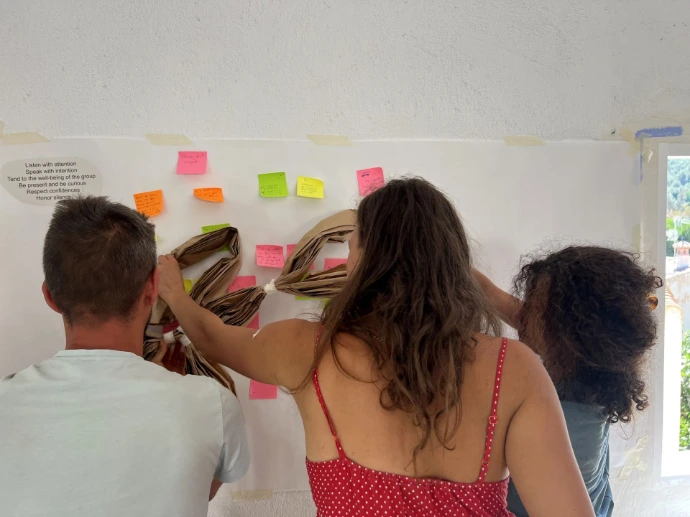
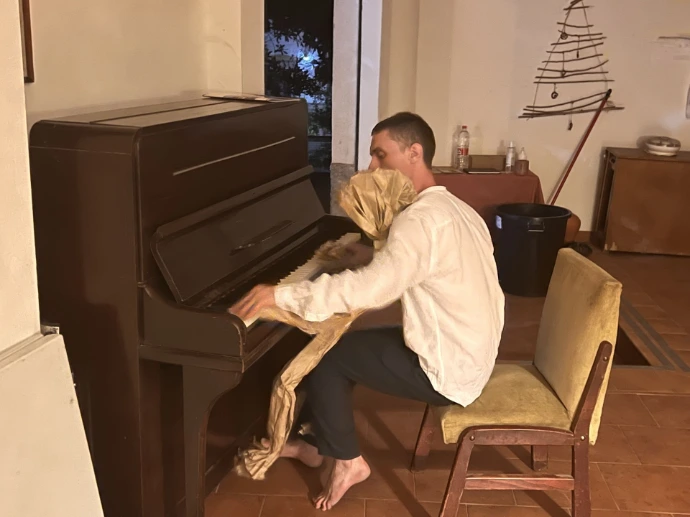
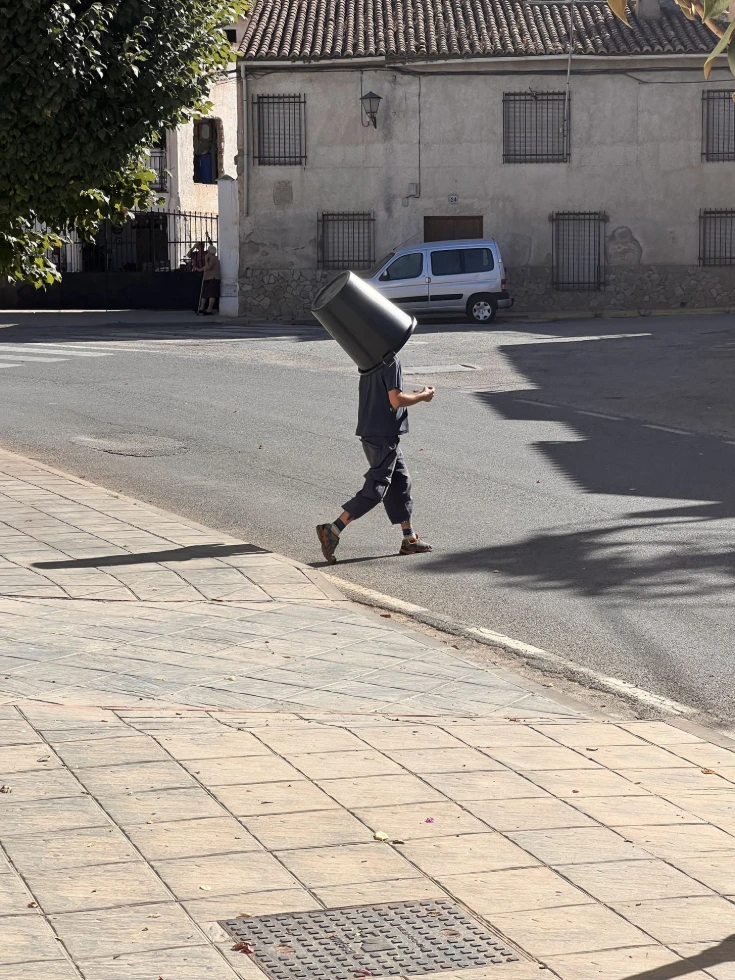
They worked as a third thing or entity set between people, making a certain kind of contact unavoidable. What moved around them was necessity: breath, and the adjustments you make holding something that might tear. The body reorganised itself in real time. Inside the exercise, no one spoke. Those who had come naming communication as the thing that failed them spent ten days in an exchange that ran entirely through the hands. Around the exercise there was talk, and laughter, and argument. A participant crossed the village square with a bin over their head. In the evenings, someone played the piano.
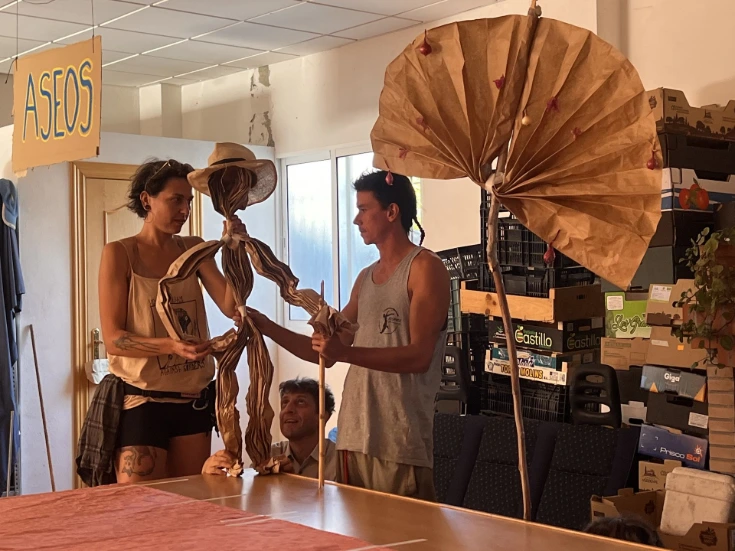
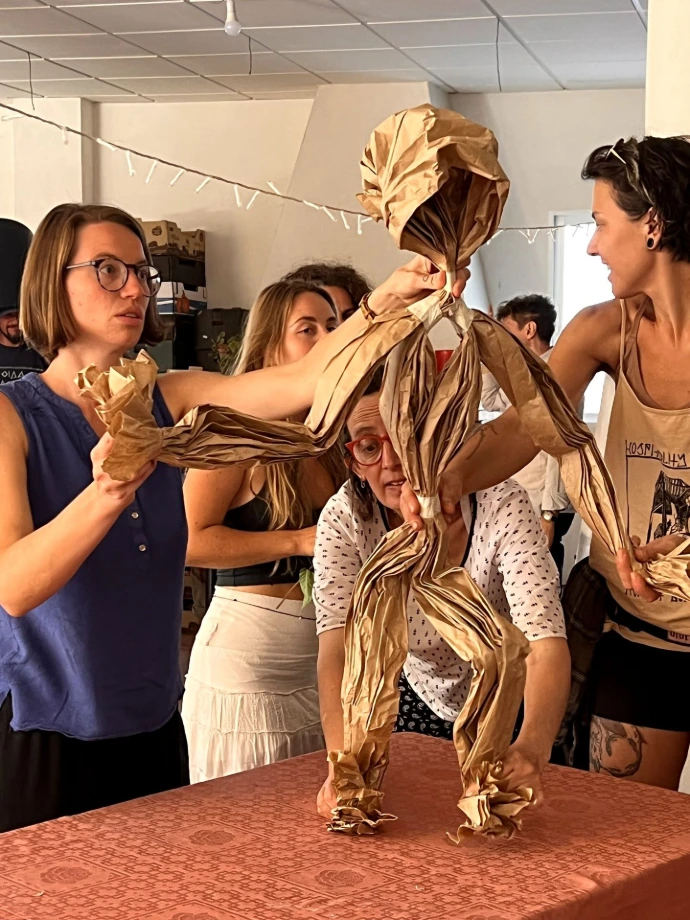
A disagreement about power — who speaks, who decides — came back as a hesitation. Four people adjusted their grip on the same figure, none willing to take charge, each waiting to be met halfway.
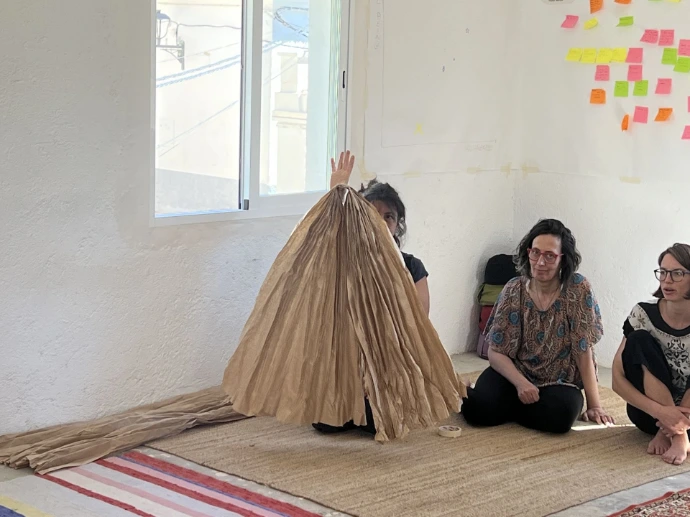
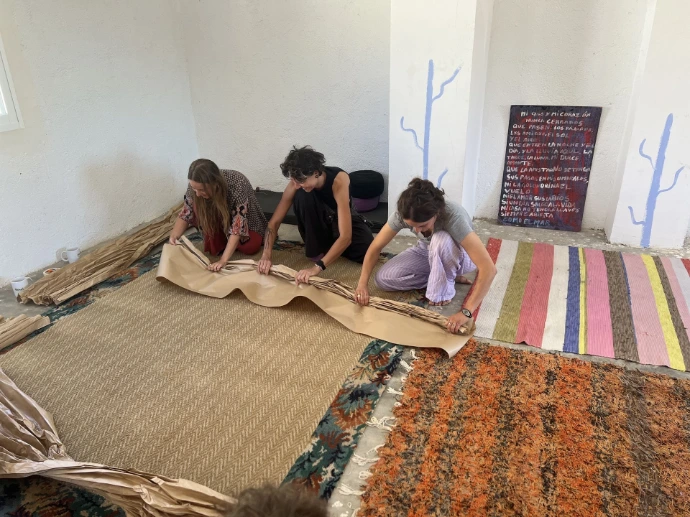
The paper bodies demanded exactly what the residencies had been discussing in theory: that several people carry them, that movement slow to match their fragility, and that somebody take the risk of moving them at all. A figure stays a bundle of paper until someone decides otherwise, in front of everyone, without knowing what will follow. Here the same material arrived as a physical requirement rather than as a proposition.
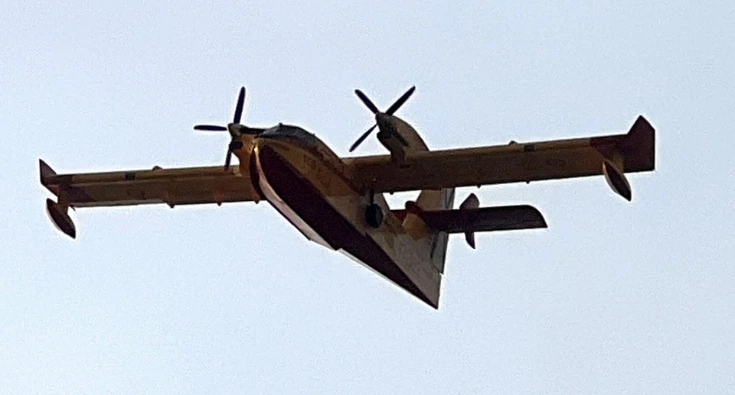
Here systems awareness stopped being a subject and became a condition. Interdependence, exposure and threat were the terms everyone was already working under. Meanwhile the planes went back and forth overhead all afternoon, carrying water to the fire.
The ash on the paper meant nothing. It was ash, falling on paper. The work made room for the world without explaining it.
What the work rested on
We treated the group as what René Kaës calls a common and shared psychic space: the kind where what passes between people is not only exchanged but produced on the spot, and where no one governs the result alone. He describes a field of projections and cross-identifications that no participant controls, producing effects nobody intended. The others keep rewriting each person's inner life.
Enrique Pichon-Rivière offers a more uncomfortable proposition. A group must face its own epistemological obstacles before it can say with any accuracy what its task is. They sit inside the group's way of knowing, as blind spots that never announce themselves. The group does not know that it does not know. Facing them means letting the frame itself go uncertain.
Those who arrived having watched a farm dissolve, or a collective unravel over things left unsaid, had already met these obstacles. The open space gave them a place to inhabit the obstacle rather than analyse it.
No one goes on being the same "I" while the way of relating to "you" changes. The two are made in the meeting.
Behind this ran a line of reading on cognition and living systems, which kept the question of how anything comes to know anything from resolving too quickly into method. Maturana and Varela on autopoiesis, Bateson on the ecology of mind, Hoffmeyer's biosemiotics: cognition is a system changing structure as it meets things. A living system reorganises itself in the receiving. What a group knows is inseparable from what it is becoming.
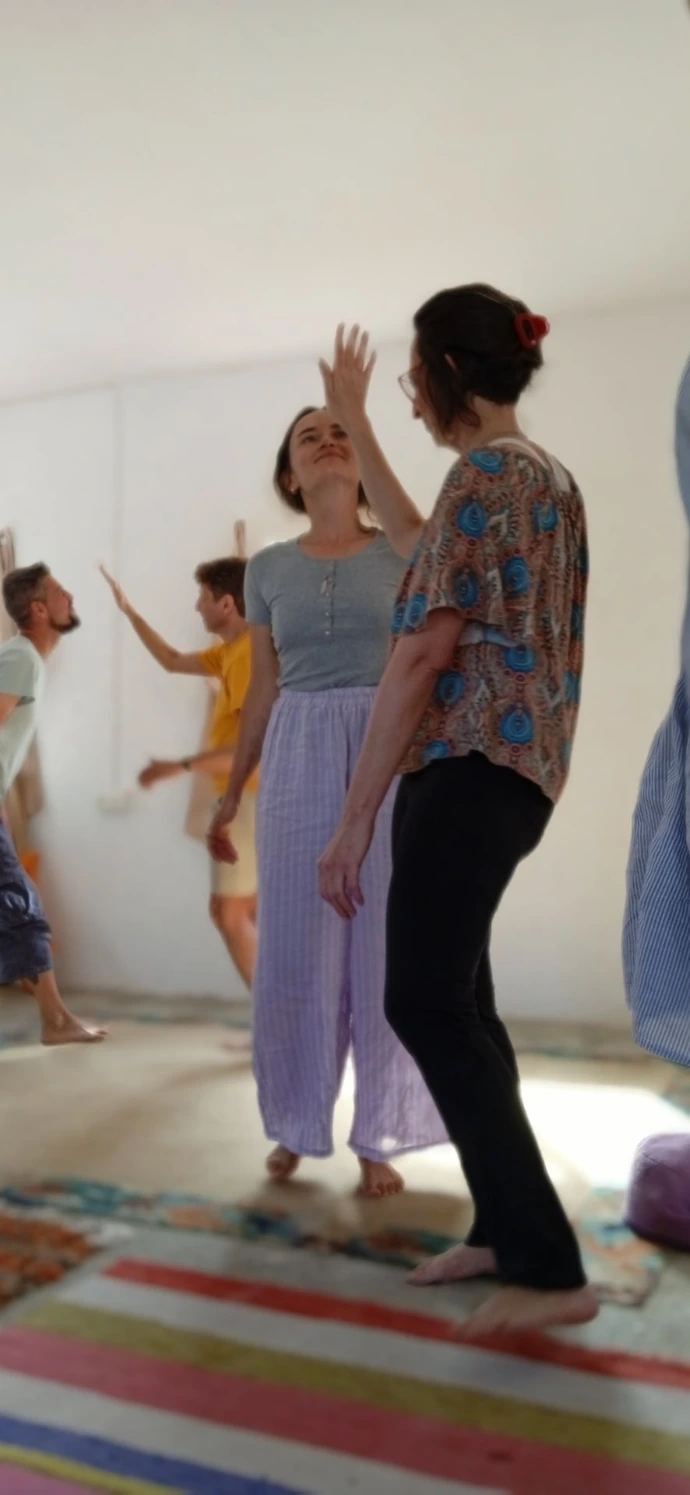
The February group was not the September group. You could see it in their bodies and their faces, and in what they no longer held between themselves and the room.
What remained open
Programmes like this exist to demonstrate that something got transferred. This work showed something closer to the reverse: no design, however carefully assembled, covers everything that walks into the room where a group is working. Something arrives that the plan never anticipated. You cannot build the capacity to receive it in advance. You can only make space.
The ash fell for ten days. Some figures stayed where they were made. Some came apart. One went home on the bus, in the seat beside the person who had made it. It takes more than one to lift what is fragile.