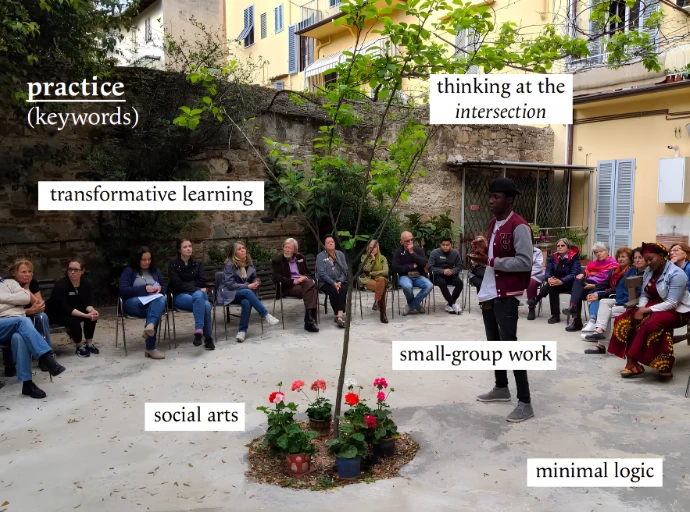
A challenge
of capabilities,
not only of problems
What if the crises we face—ecological, political, social—are not separate problems but folds of a single weave? What if addressing them requires not only new strategies but new capacities to perceive, relate and respond?
ParamitaLab works at that intersection. Our practice—fieldwork in the subject—creates the conditions where the singularity of each can emerge as generative difference that transforms the collective.
We accompany educators, activists, artists, communities and institutions in processes where transformation does not come from external solutions, but from cultivating the capacity to respond from complexity itself.
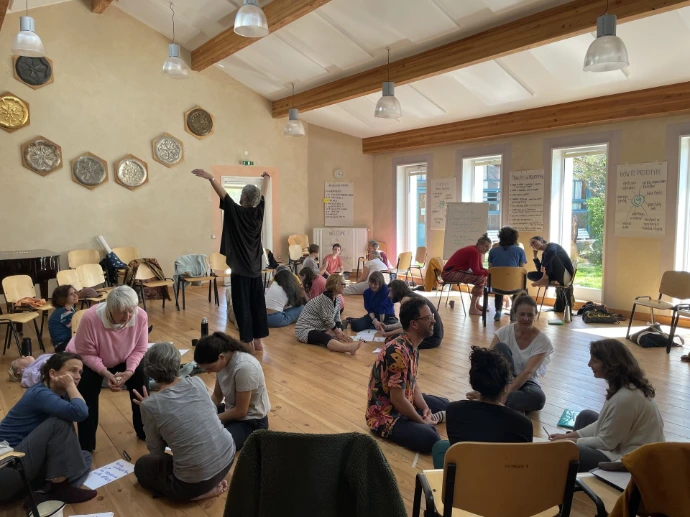
Fieldwork in the Subject
Creating the relational conditions where the singularity of each—this unique way of inhabiting constitutive incompleteness—may emerge as generative difference that transforms the collective weave, without promise of completion yet with the ethical responsibility to safeguard openness.
We work in non-therapeutic realms, from relational holding. The facilitator holds the conditions and the directionality of the space from an asymmetric function, yet neither directs nor interprets: they accompany what emerges by inhabiting the tension of not-knowing.
In that shared unknown opens the possibility of passing from conditioned reaction to singular response. Value does not reside in a prior essence, but in the difference that each act introduces into the shared weave, amplifying the common.
We do not work in solitude. Supervision and intervision are essential: spaces where we who accompany elaborate what befalls us and tend to the ethics of the encounter.
Approach:
Four Interwoven Dimensions
Cultivating the inner capacity to be affected, to respond, to remain open to what the world communicates. For those who experience deep resonance with the world will naturally exercise responsivity before the exigencies it presents.
Doing is not separated from thinking or feeling. Our practice is embodied: we hold devices where knowledge emerges from encounter, from shared experimentation, from the concrete act in living relational contexts.
We work with groups because transformation arises from the relational fabric: each singularity that emerges in the shared space modifies the weave that sustains it. The group is the living space where the singular and the collective co-constitute one another.
Reflection is not solely posterior to practice: we name what happens, we elaborate what emerges, we conceptualize from lived experience. Reflection-in-action and reflection-on-action interweave and produce distinct and complementary forms of knowledge."
Foundations:
Four Registers that Breathe Together
These four aspects—capacity-building, practice, the relational and reflection—are not sequential stages but interwoven dimensions. They unfold through four registers that sustain a double movement: creating the conditions where each singularity finds its voice and each encounter reveals something that none carried alone.
The human being is born in relation. From the outset, subsistence depends on another who receives, feeds, holds. The marks of these primary bonds structure the manner in which we establish our union with what transcends and endures. We are, from the origin, relational beings.
Therefore transformation does not occur "in" subjects in an isolated manner, but in the shared relational space. Our practice cultivates the capacity to be affected together—to find ourselves in that space where mutual resonance can reconfigure how we perceive, relate and respond.
We work with the complexity of the subject in three dimensions: the symbolic (language and culture that constitute us), the imaginary (desires, projections, identifications) and the real (that which resists symbolization and returns).
The subject is not a unified entity transparent to itself. It is constituted by language, traversed by dimensions it does not fully control. This incompleteness is not a defect to be repaired, but the opening from which something new can emerge.
We work with this constitutive hiatus—the space where the subject does not fully coincide with itself—as the generative place from which a singular, non-automatic response can advene.
Every living being carries within itself a tendency to persist, grow and expand its capacity to act upon the world. Our practice attempts to create the conditions for that vital force to manifest, for each subject to unfold their potency more fully.
Yet although this is so, the human subject is not a closed, autonomous entity. Ex-sists: is always already in the world, constituted by language, decentered from itself. This understanding—that the subject does not fully possess itself—traverses all our practice.
Far from working from the illusion of the sovereign subject who knows and controls itself fully, we operate from the recognition that the subject advenes in relation, in language, in encounter.
We hold basic goodness: the inherent potential of each being to move toward coherence, compassion and creative expression. And we trust that this potential can unfold when the conditions are held for incompleteness to become generative openness.
We practice politics by creating ecosystemic spaces, recognizing that transformation requires more than representation; it requires genuine collective construction. We value each subject by the difference that their singular form of response introduces into the common.
This is an ethics of the act: without guarantees, with the full responsibility of holding the conditions in which each singularity can manifest itself as a difference that enlarges the order of the possible and transforms the collective weave.
We are fully aware that we are barely instruments of a collective decision, yet we fully assume the duties and responsibilities this entails. There is no contradiction between recognizing ourselves as bearers of something that exceeds us and responding with total responsibility: precisely because each concrete act responds to a collective intention, it demands the utmost commitment and the greatest ethical attention.
Who we are
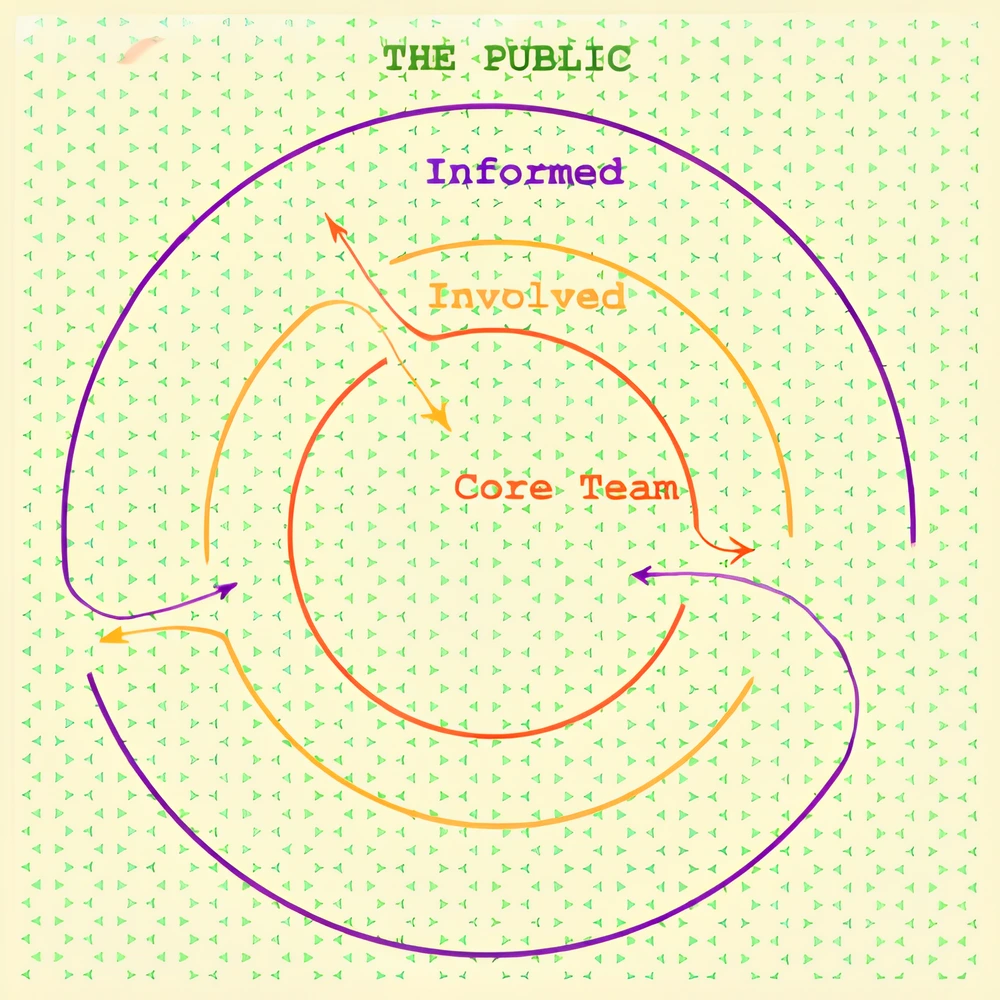
At ParamitaLab, projects move like waves propagating from a stone thrown into still water: they extend outward, shape new possibilities, and then return with ideas that inform what comes next. At other times, they initiate a drift that becomes something completely new, that no longer belongs to us, that takes on a life of its own and is no longer ours, which we release with gratitude.
We work with a project-based structure inspired by the behavior of flocks of birds, where leadership emerges organically according to context and experience, rather than being based on fixed roles.
*image borrowed from Alter'Azioni, a friend association
ParamitaLab was born in 2017 from a profound encounter. Four professionals from education, psychology, business and politics discovered, through personal exploration and a journey through the philosophies of ancient Western thought, Eastern traditions and anthroposophy, that the world needs new spaces for transformation. Theories and diagnoses were not enough: experiential laboratories were needed, places where a renewed perspective could emerge, grounded in deep human values and genuinely directed towards the community of humankind.
Thus ParamitaLab emerged: a meeting space where theory and practice unite to generate personal and collective transformation. We work with changemakers in different fields who seek something more than technical solutions. Together with them, we seek to understand the profound roots of the challenges we face as humanity.
Team
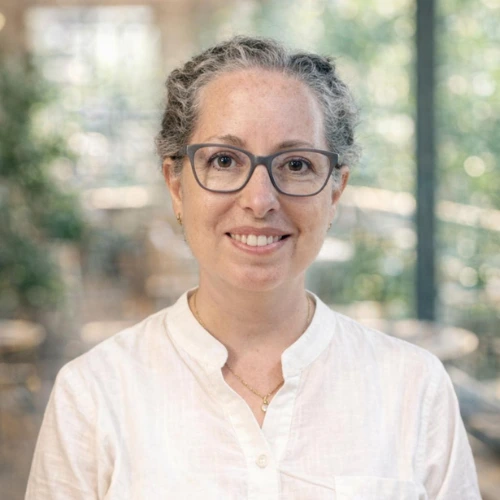
Marina Seghetti
Legal Representative & Direction

Luna Villalba
Operations & Network Coordinator (Under 30)
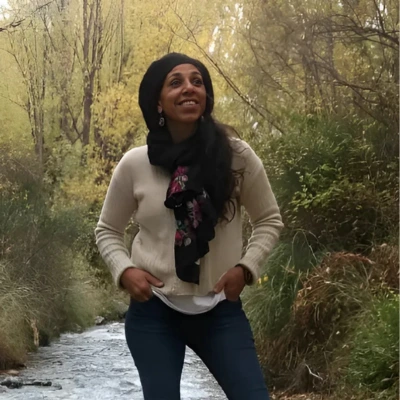
Alejandra Santini
Argentina Lead
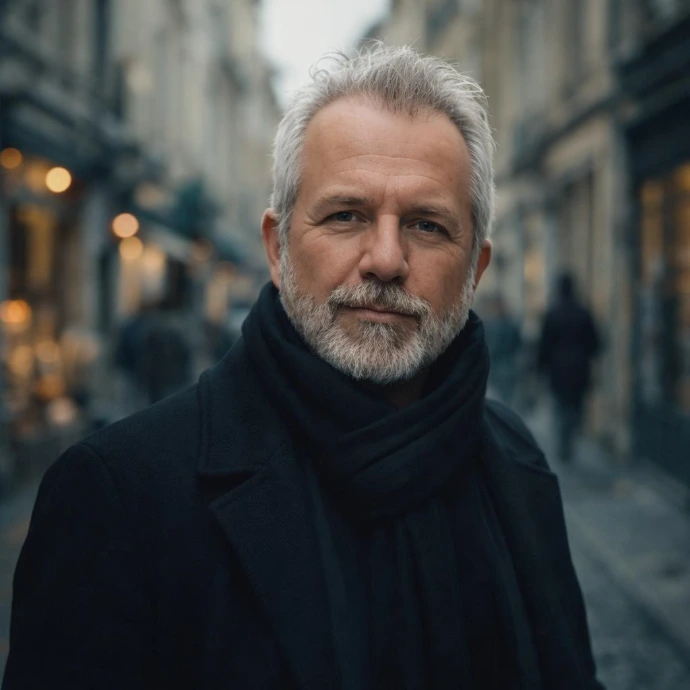
Paolo Stollagli
ESC Referent
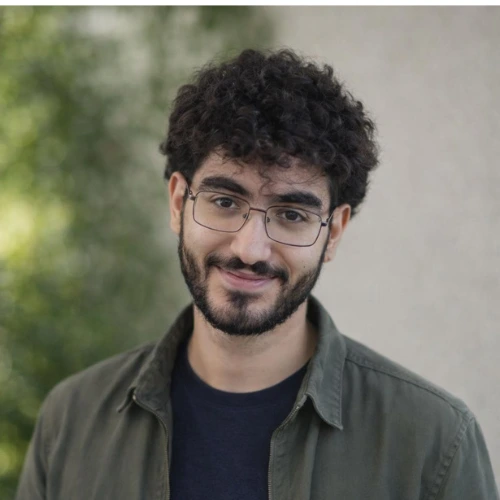
Tadeo Villalba
Process & Local Steward (Under 30)

Marco Rossi
External Administrative Support Services
The act of articulating the possible is never solitary, but a collective weave formed by many threads.